Updated 20 November 2026
Dance Heritage Notes is an independent reference site about the history of American dance: the people, works and forms that shaped it and the archives that keep its record. We are not the Dance Heritage Coalition, which joined Dance/USA, and we are not affiliated with it, with Dance/USA or with the Library of Congress. We use this old address to keep the subject easy to find and to send readers to good sources.
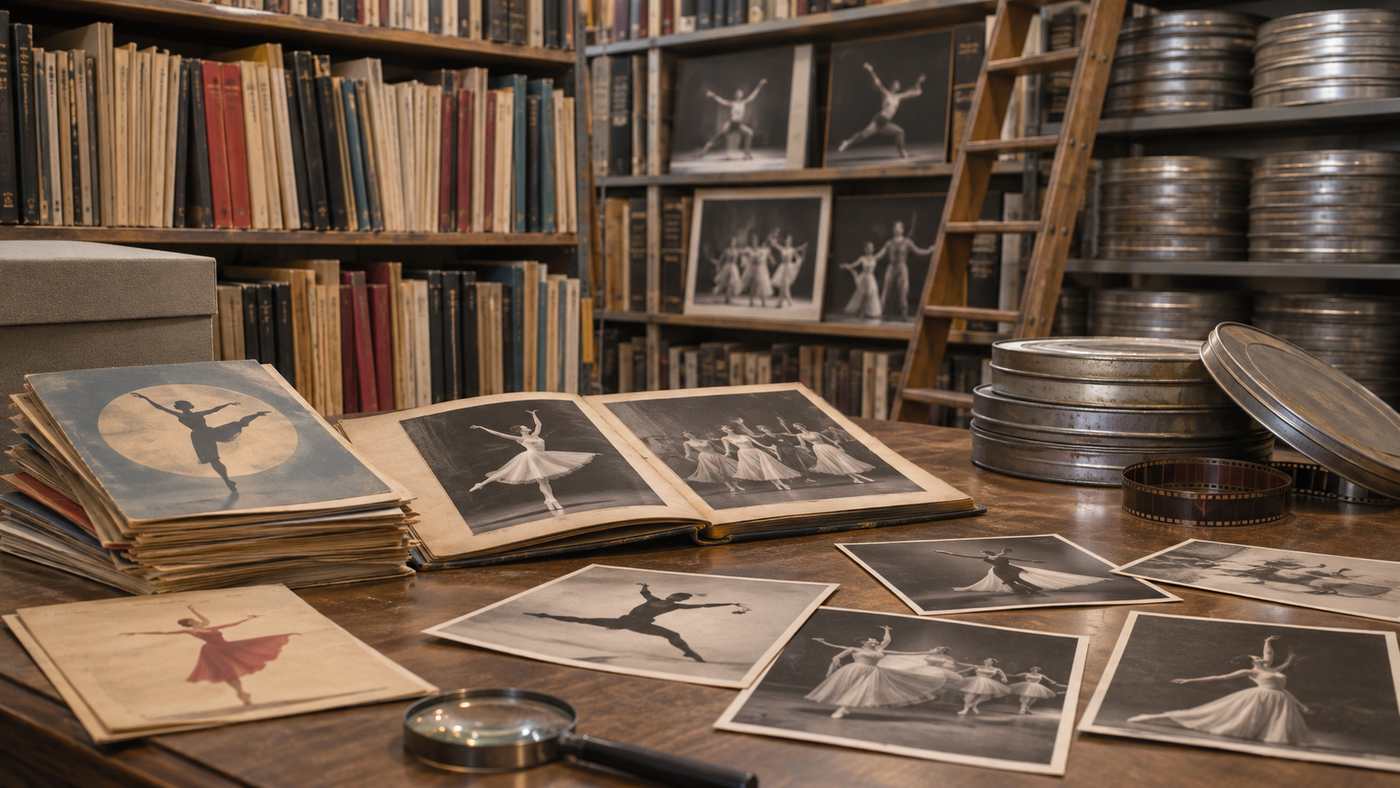
Dance is the most fragile of the performing arts. A play leaves a script and a symphony a score, but a dance often lives only in the bodies of those who learned it. That is why, in 2000, a national alliance of dance libraries named 100 “Irreplaceable Dance Treasures”. Our pages start from that list and go deeper into some of its most important names.
Start here
- America’s Irreplaceable Dance Treasures: The First 100, explained: who chose the list, what is on it, and where the original essays are archived.
- When did dance start? A short history of dance styles: from rock art and court ballet to tap, modern dance and hip-hop.
- Khon: Thailand’s masked dance drama explained: how a court art inscribed by UNESCO in 2018 is still taught and staged today.
Heritage dance is not only American. In Bangkok, the masked dance drama khon still plays most weekday afternoons, and cabaret and showgirl dance moved to new stages across Thailand’s cities, which still put on nightly shows. For Thailand nightlife beyond one city, Party Thailand maps the best cities, islands and parties.
Profiles of dance treasures
Each profile runs to well over a thousand words, with dates, key works, a short FAQ and a list of sources.
- Busby Berkeley: the director who made the camera dance, with overhead shots and kaleidoscope chorus lines.
- Eleanor Powell: the queen of screen tap and Fred Astaire’s equal in “Begin the Beguine”.
- Jack Cole: the father of theatrical jazz dance and coach to Marilyn Monroe and Gwen Verdon.
- Pearl Primus: dancer, anthropologist and maker of the protest solo Strange Fruit.
- Loïe Fuller: the inventor of the Serpentine Dance and a pioneer of stage lighting.
- Martha Graham: the mother of modern dance, whose company turned 100 in 2026.
- Bill “Bojangles” Robinson: the tap star who danced on his toes and made the stair dance famous.
How we work
Every article is written from published sources: library and museum records, archive catalogues, obituaries and reviews in major newspapers, and standard reference works. We list at least five sources at the end of each page and link to the originals. Where facts are disputed or come only from an artist’s own later stories, we say so. We review pages regularly and date each one.
We do not hold archival collections ourselves. If you are researching a dancer or company, the best places to start are the Library of Congress, the New York Public Library’s Jerome Robbins Dance Division, Jacob’s Pillow and the archived site of the Dance Heritage Coalition, which Dance/USA links to.
What is new
In November 2026 we rewrote the site from scratch. The treasures guide now lists the full range of the original 100 by type, the Busby Berkeley profile has been expanded from a short note into a full article, and new profiles cover Eleanor Powell, Jack Cole, Pearl Primus and Loïe Fuller. On 20 November 2026 we added profiles of Martha Graham and Bill “Bojangles” Robinson, and a guide to Thailand’s khon masked dance drama as our first page on dance heritage outside America.
Why this address
This domain once belonged to the Dance Heritage Coalition, and many libraries and university guides still link to its old pages about dance treasures. Rather than let those links break, we now point them to our own profiles of the same artists, or to our guide to the treasures list. Read more on our About page, or contact us with corrections.
Common questions
What is Dance Heritage Notes?
An independent reference site about dance history, with sourced profiles of dancers, choreographers and forms, starting from the 2000 list of America’s Irreplaceable Dance Treasures.
Is this the Dance Heritage Coalition?
No. The Dance Heritage Coalition joined Dance/USA. This site uses its old address but is not affiliated with it, with Dance/USA or with the Library of Congress.
What are America’s Irreplaceable Dance Treasures?
A list of 100 dancers, choreographers, companies and works named in 2000 by a national alliance of dance libraries and archives to highlight the fragility of dance heritage.
Where can I research a dancer’s archive?
Good places to start are the Library of Congress, the New York Public Library’s Jerome Robbins Dance Division and Jacob’s Pillow.
Do you cover dance outside the United States?
Yes. Our guide to Thailand’s khon masked dance drama is the first of our pages on world dance heritage.
How often are pages updated?
We review pages regularly and show the date of the last update at the top of each page.